
Nepal’s House of Representatives (HoR) election is scheduled for 5 March 2026. Parliamentary elections are typically held every five years, with the most recent taking place on 20 November 2022. However, this election has been brought forward by nearly two years following recent political developments.
On 8–9 September, Nepal witnessed what many described as a Gen Z–led protest movement, driven largely by growing youth frustration over corruption, nepotism, and perceived governance failures. Public dissatisfaction intensified amid controversial policy decisions, including proposals to regulate social media platforms. What began as youth mobilisation quickly escalated into nationwide unrest.
The consequences extended far beyond initial expectations. Incidents of unnecessary use of violence — including reports that students in college uniforms were shot during clashes — deeply shocked the nation. The protests and their immediate aftermath resulted in 76 deaths, predominantly among young students. Videos circulating widely on social media amplified fear and emotional distress across the country.
Yet alongside the trauma, the protests also sparked renewed civic awakening. For many citizens who had long demanded reform and accountability, the movement represented a turning point.
The psychological dimension of this election is particularly significant given Nepal’s broader mental health landscape, especially among young people who form the largest share of the electorate. Findings from the Global Burden of Disease Study 2019 show that depressive and anxiety disorders are among the leading causes of years lived with disability in Nepal, and that the contribution of mental disorders to the country’s overall disease burden has increased over the past three decades.
At the same time, the World Health Organisation (WHO) has warned about the psychological risks of prolonged exposure to distressing information in digital environments. WHO notes that “infodemics” – the overabundance of information and misinformation can heighten anxiety and confusion, particularly during crises.
According to the Election Commission Nepal, the total number of registered voters stands at 19,003,689 for the election. Among them, 9,663,358 are male voters and 9,240,932 are female voters, while 200 voters are registered under the “other” category. And around 50 percent of Nepal’s registered voters fall within the 18–40 age group. The intersection of youth political engagement, digital exposure, and existing mental health vulnerabilities makes the emotional climate surrounding this election particularly consequential.
Related Articles:
While political analysts focus on electoral calculations, voter turnout projections, and party strategies, research in political psychology suggests that election cycles can also influence stress levels, social relationships, and overall mental wellbeing. In Nepal’s current context, marked by youth mobilisation, public dissatisfaction, and intense digital engagement; the psychological dimension of this election may be as significant as its political outcome.
Youth Voices: Hope and Concern
Many young voters appear cautiously hopeful about the upcoming election, viewing it as an opportunity for meaningful change after months of unrest. For some, the vote represents a shift from protest to institutional politics — a chance to translate demands for reform into democratic outcomes.
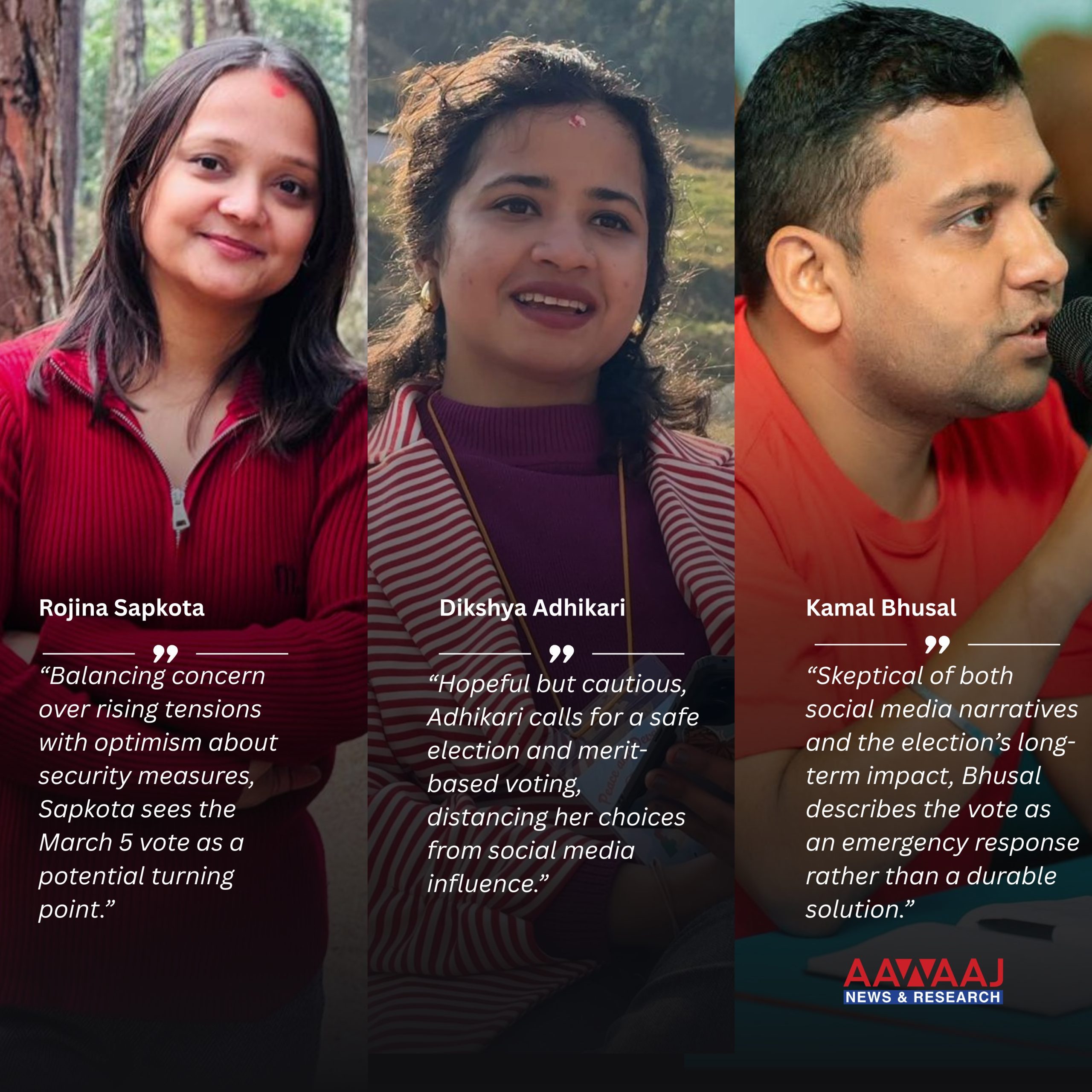
Dikshya Adhikari (27) said she feels both hopeful and concerned as Nepal approaches the March 5 election.
“I hope the election is held safely and that people vote for capable candidates, not just for their own groups,” she said.
Although social media has been highly active during this political period, Adhikari said it has not influenced her decision. “I vote based on who I believe can deliver.”
After the protests, she sees the election as an opportunity for stability. “We are currently under a temporary government, and I hope this leads to a stable one that truly reflects the public’s will,” she said, emphasising the importance of maintaining peace and security.

Similarly, Rojina Sapkota (25) expressed both concern and hope.
“There are new disputes emerging in the name of religion, and incidents like tearing party flags and attempts to vandalise offices worry me about what might happen during and after the election,” she said. “At the same time, increased security gives me hope that the process will remain peaceful.”
Sapkota acknowledged that social media has affected her emotionally. “I see conflicting narratives supporting different parties, which creates confusion and emotional disturbance.”
Despite tensions, she remains cautiously optimistic. “Unlike previous elections, this one feels like it could bring meaningful change.”
Kamal Bhusal (39) said social media has significantly influenced his emotions during the current political period. “Social media has strongly affected me because it often does not reflect the ground reality. Instead, it tends to exaggerate situations and manipulate the emotions and rational thinking of the audience,” he said.
He described the upcoming election as different from previous ones. “This is not a routine election. It is more like an emergency solution scheduled by the transitional government to address the immediate disputes that arose after the Gen Z protests,” he said. “In my opinion, it does not provide a durable solution to Nepal’s long-term challenges.”
Unlike past elections, which he recalls as festive and celebratory, Kamal said this one carries a different emotional tone. “Previous elections felt like festivals or ceremonies. This time, I do not feel the same level of excitement.”
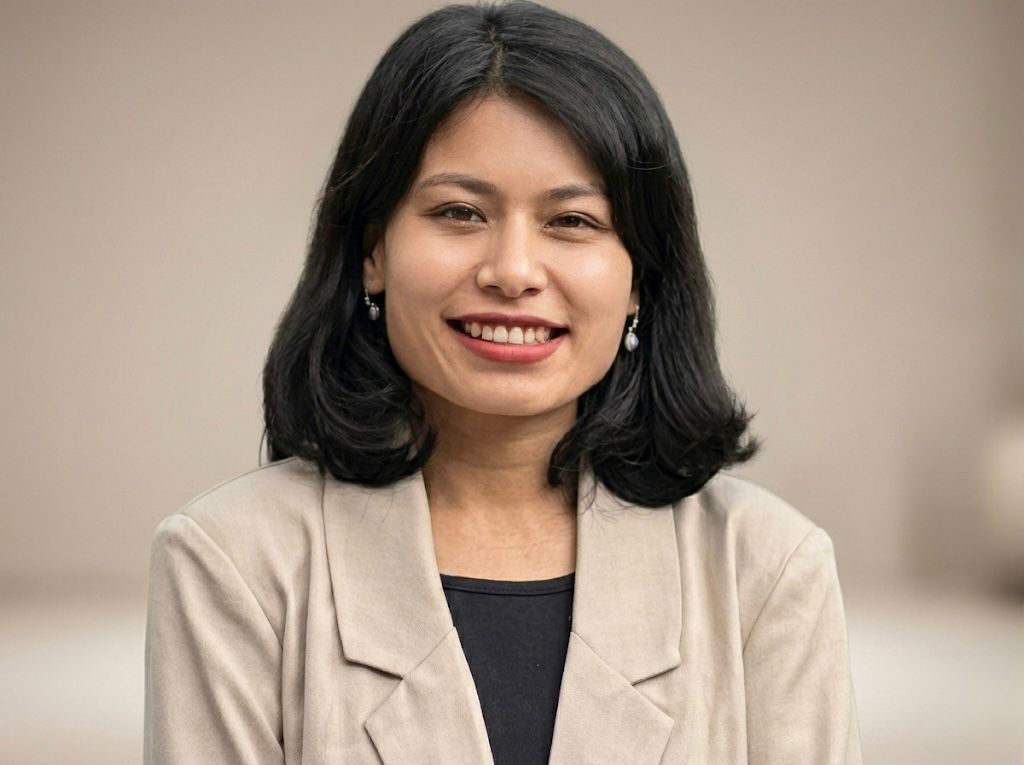
Susmita Rajopadhya, Counseling Psychologist, says election periods can significantly heighten stress and anxiety, particularly in politically sensitive environments.
“High uncertainty about leadership decisions, policies, and their impact on daily life — such as employment, education, business stability, and social harmony — creates psychological strain,” she said. “When people feel they cannot predict or control outcomes, stress can gradually develop into anxiety. This often manifests as excessive worry, difficulty sleeping, mental preoccupation with future possibilities, and difficulty staying focused on the present.”
Rajopadhya noted that young people are particularly vulnerable during politically intense periods. “Many adolescents and young adults express fears about disruptions to their education, especially students preparing for important examinations. They worry that protests, strikes, or instability could delay exams or affect their academic progress,” she explained.
She added that exposure to unrest during the Gen Z protests has heightened emotional sensitivity among youth. “When young people witness violence or instability even indirectly through social media, it can create fear and insecurity that carries into future political events, including elections.”
According to Rajopadhya, social media plays a major role in amplifying distress. “Continuous exposure to political debates, sensational headlines, graphic visuals, edited clips, and misinformation can heighten fear and confusion. Constant scrolling creates a sense of urgency and overwhelm, which further increases stress.”
Common symptoms during election periods include disturbed sleep, changes in appetite, irritability, difficulty concentrating, persistent worry about the future, emotional fatigue, nightmares, intrusive thoughts, and reduced productivity. “When stress becomes prolonged, it can interfere with daily functioning and overall wellbeing,” she said.
To manage election-related stress, Rajopadhya recommends:
- Stay connected with your support system: Talking with trusted family members, friends, or colleagues can provide reassurance and emotional relief. Open conversations help people process fears rather than internalise them.
Parents should regularly check in with children and adolescents to understand their concerns, while young people including those living abroad can benefit from staying connected with loved ones.
- Set healthy media boundaries: Limit excessive news and social media consumption. Choose specific times of the day to check updates and rely on credible, verified sources. Avoid constant exposure to distressing content.
- Maintain daily routines: Keeping a regular schedule for sleep, meals, work, and study helps create a sense of stability and control during uncertain times.
- Practice healthy coping strategies: Engage in activities that reduce stress, such as physical exercise, mindfulness, prayer or meditation, spending time in nature, or creative hobbies.
Avoid unhealthy coping mechanisms such as excessive caffeine, smoking, alcohol use, or emotional overeating, as these can worsen anxiety over time.
- Focus on what you can control: Shifting attention toward personal responsibilities, self-care, and constructive actions can reduce feelings of helplessness.
- Seek professional support when needed: If stress or anxiety begins to interfere significantly with daily functioning, sleep, or relationships, seeking help from a professional, such as counsellor, or mental health professional, Doctors can provide effective coping tools and emotional support.
“If stress or anxiety begins to significantly interfere with daily functioning, sleep, or relationships, seeking professional support from a counselor or mental health professional is important,” she said.
Below are also a few important contact numbers for those seeking help:
Nepal Suicide Prevention Helpline: 1166
TPO Nepal (Transcultural Psychosocial Organisation): 1660 010 2005
TU Teaching Hospital Suicide Prevention Line: 9840021600
Patan Hospital Suicide Helpline: 9813476123
Related Articles: